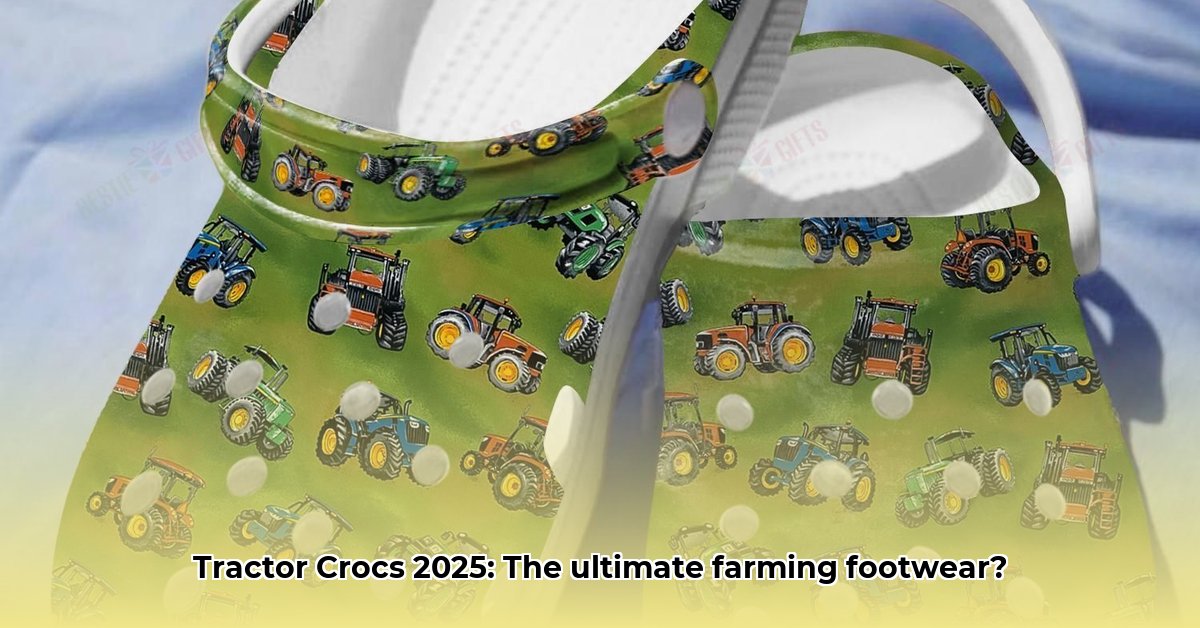
What are Tractor Crocs?
The term "Tractor Crocs" describes the increasingly popular trend of wearing Crocs-style clogs for agricultural work. Unlike traditional work boots, these offer a perceived advantage in comfort and lightweight design, making them appealing for certain tasks. However, the lack of standardization and independent safety testing raises significant concerns. Amazon search data reveals a substantial surge in consumer interest, prompting a closer examination of this emerging market. For more detailed product categories, see our tractor categories page.
Market Analysis: A Wild West of Choices
The "Tractor Crocs" market is currently unregulated and lacks standardization. Numerous brands offer varying features, making it challenging to compare products objectively. Relying solely on consumer reviews, while informative, is unreliable due to the subjective nature of experiences and the absence of rigorous testing. This lack of consistent data creates risks for both consumers and stakeholders.
| Product Name | Price Range | Key Features | Customer Ratings (Amazon - Illustrative) | Safety Features |
|---|---|---|---|---|
| FarmLife Footgear | $30-$50 | Lightweight, water-resistant, easy cleaning | 4.2 stars (average) | Minimal; no reinforced toe cap or heel |
| Agri-Step Clogs | $40-$60 | Reinforced toe cap, slip-resistant outsole | 4.0 stars (average) | Partial; toe protection limited; outsole only |
| Country Comfort Works | $50-$70 | Breathable material, cushioned insole, reinforced heel | 3.8 stars (average) | Moderate; reinforced heel; may offer some protection |
(Note: Product names and data are for illustrative purposes only. Actual product features and customer ratings may vary.)
Is there a real safety advantage to these features? More research is needed.
Review Section: Comfort vs. Safety
Consumer reviews highlight the comfort and ease of cleaning of "Tractor Crocs." However, opinions on durability vary widely. More importantly, the lack of detailed safety information and independent testing limits our ability to assess their effectiveness in protecting against farm-related hazards. While many users find them comfortable for light tasks, their suitability for heavy-duty work remains questionable. Are the reported comfort levels worthwhile, considering the potential safety risks? We need better data.
Buyer's Guide: Choosing the Right Crocs for You
Selecting "Tractor Crocs" requires careful consideration of your specific needs and priorities. This six-step process can help:
- Define Your Tasks: Light gardening or heavy machinery operation? This dictates required protection levels.
- Prioritize Safety: Always prioritize safety. Crocs are not a substitute for appropriate safety footwear in hazardous situations.
- Assess the Environment: Wet, muddy, or cold conditions demand specific material choices (e.g., lined Crocs).
- Examine Features: Look for reinforced areas but understand limitations in protection.
- Review Reviews Critically: Interpret online reviews cautiously; they are subjective and lack standardized testing.
- Budget Accordingly: Balance comfort and protection; don't compromise safety for cost.
Safety Concerns and Regulatory Implications
The lack of industry standardization and independent safety testing poses significant risks. Inadequate foot protection can lead to serious injuries. Current regulations lag behind this emerging market, highlighting an urgent need for clearer safety standards and thorough testing protocols.
The Future of Tractor Crocs
The popularity of "Tractor Crocs" demonstrates a demand for comfortable agricultural footwear. Established footwear brands may enter this niche, leading to improved designs and enhanced safety features. The future hinges on addressing safety concerns through industry-wide collaboration on standards and testing.
Conclusion: A Call for Improved Standards
"Tractor Crocs" present a mixed bag. While they offer comfort and convenience, their lack of standardized safety features and independent testing necessitates caution. The current market needs improved standards and rigorous testing to protect agricultural workers. Prioritize safety; consider the specific risks of your work tasks and choose accordingly. Until improved standards are in place, buyer beware.